


18 Temmuz 2025
Nine years on from the coup attempt, hundreds of thousands of Turks are still living with its aftershocks
It is tough to write about anniversaries because, usually, the further you get away from an event the less acute its effects are. But each year in Turkey on July 15 I take stock of a story that only grows: more people dismissed from their jobs, ejected from the military, or battling through Kafkaesque courts for acquittal and compensation each year. The failed coup attempt against Erdoğan nine years ago this week unleashed massive social and state reengineering in its backlash. Hundreds of thousands of Turks lost their jobs as teachers, prosecutors and judges, municipal officials, soldiers and police officers, plunging them from middle-class respectability into into shame and often poverty. Tens of thousands are in prison. They are all accused of being part of FETÖ – better known as the Gulenists – the Islamist cult that Erdogan says launched the strike against him. The months straight after the coup were a suspicious time in Turkey, thick with fear. Neighbours and friends denounced each other, civil servants turned up to work to find that they had been fired, and even the absurdest evidence could see you arrested. Anyone who had attended or worked in a Gulenist school or university, had an account at a certain bank, or was found with a single dollar bill starting with an F serial number – and there are millions of them all over the world – could be indicted. People were placed under travel bans and their names were added to public lists. Even in the private sector many employers were reluctant to hire them.
So they took work wherever they could. I met a young former police commissioner who was working in a friend’s garden centre, and others in the hospitality sector. Some escaped Turkey with people smugglers, crossing the Evros, or Meriç river into Greece to try their luck travelling on to western Europe to claim asylum. In the summer of 2021 I was arrested at the same border as I tried to report on Athens’s tightening crackdown at its frontier with Turkey. When I was brought to the courthouse in Orestiada, the nearest drab Greek town, there were several middle-aged, middle-class Turkish couples also awaiting their hearings in the high-ceilinged waiting salon. My translator told me he saw Turks coming through each day now. They looked like school teachers, or scientists, and were they were likely something similar. None of the women I saw in the court covered their hair – but the Turkish government said that the devout Gulenists sometimes uncover so as to hide themselves among the secularists. Nobody was to be trusted.
At first the accused hid themselves, shy to meet with journalists and always asking that their names not be used. To even be associated with someone indicted or fired from their job was to come away with the smell of it on yourself, and family and friends, apart from the most loyal, distanced themselves. Then, that first furious sear of anger wore off. The purge didn’t last a few weeks: it continued for months, and then years, and continues today. The dragnet grew to scrape up Kurds, and leftists, and intellectuals, and then the CHP. Within a few years everyone knew someone who had been accused and now the attacks were coming in on the journalists, media channels and writers too. The economy tanked as Erdoğan tightened his grip. Nobody was happy anymore. The sting of association with 15 July lost its edge over the years, but still, to be one of the accused was to live with a lingering miasma that could sweep up over you suddenly like a stench from the Bosphorus. Cases remained open for years, threatening an arrest warrant at any time, or they could be reopened even if they were initially closed. Each small battle – getting acquitted, getting reinstated in your post – took years, if it happened at all. For many, the situation was simply beyond hope.
In late 2020 I received a message from Ilker Kalin, an army officer who was coming to the end of his compulsory service and was planning to leave the military. His younger brother, Alper, was a 24 year old airforce cadet on the night of the coup, recently returned from training in the US, now based at the Akıncı Air Base in Ankara. It was the nerve centre of the coup attempt, but Alper and his classmates had only arrived at Akıncı a month earlier, and had not even been issued with weapons. They spent the coup standing on guard inside the base on the orders of their superiors. They knew nothing of the putsch before it happened. Yet within days Alper and his classmates had been arrested in the round ups, and were facing trial for coup plotting.
Ilker wanted me to write about his brother’s case and I did so, working from letters that he had sent from Sincan prison near Ankara, where he was jailed, and interviews with his family and friends. I spoke with US air force officers who had worked alongside the cadets and were horrified at what had happened. Officers from other countries within NATO wanted to talk too – 90 per cent of the Turkish officers on NATO postings at the time of the coup were recalled to Ankara, and those who went were arrested and charged. Many more stayed in Europe and claimed asylum.
The military has seen some of the most consequential post-coup purges, with more than 20,000 soldiers been dismissed and the top ranks and pro-Western contingents stripped out. Those who have risen to fill their places are Erdoğan loyalists, and the chain of command has been brought under the defence ministry, which is itself under the command of Erdoğan. Historic military high schools and colleges have been closed and men like Alper Kalin, once the rising generation of officers, languish in prison. In December 2020, he was sentenced as part of a mass trial which included Akin Ozturk, the commander of the air force at the time of the coup, and Fethullah Gülen himself among the 475 defendants. They were all sentenced to aggravated life in prison, meaning that they will never be eligible for parole. His twenties are gone, thrown away into Turkey’s justice vortex. Unless there is a serious change of political direction and an amnesty, he will likely remain there for many more.
Internationally, all this has been swept aside. Right after the coup attempt Erdogan was a diplomatic black sheep, ignored by other Western leaders at summits, and constantly engaging in pantomime rows with the EU. He nearly came to blows with Trump’s America in Syria, and he cosied up to Putin. But in 2025 Erdogan is back in the fold as a handy mediator, able to bring warring parties to his table, and an indispensable ally in a key position on a dangerous, unwieldy continent. We are now in a country where Ekrem İmamoğlu, the mayor of the biggest city and Erdogan’s most promising challenger, can be arrested, stripped of his post and barred from running for election, and the response from the West is almost mute. The post-coup round ups continue but they are such old news that they are barely reported in international media.
Families like Ilker’s were once the bedrock of the Republic. His father was a career officer, and Ilker and Alper went to military schools. There was a pride and an identity in being part of a military family and so part of something bigger, connected to the essence of Turkey itself. Since 15 July they have been cut adrift. Their father, now retired, does not speak with the media, still loyal to his old code although he is happy for the rest of the family to tell their story. Ilker and Alper’s mother, Kezban, speaks often, and through her I met other mothers of once-celebrated young cadets who were now years into life sentences. In neat front rooms I looked at cabinets full of awards, next to photos of smiling, clean-cut young men in uniform. For the past nine years the mothers have seen their sons fortnightly through reinforced glass.
On this anniversary of July 15 I caught up with Kezban Kalin. This is our Q&A in full.
What is Alper’s situation at the moment, how is he in prison and has anything changed for him legally?
Alper is currently being held in a single cell at Diyarbakır High Security Prison. He was transferred there three years ago. Initially, he shared a cell with two other inmates, but after the Court of Cassation upheld his aggravated life sentence last year, he was placed in solitary confinement.
He now spends almost all of his time completely alone. He is allowed outside into the cell’s yard for just two hours a day, and even that time is spent in isolation, as inmates are not allowed to be there at the same time. He is permitted two visitations and two 10-minute phone calls per month. That is the only contact we are allowed to have with him.
Legally, the situation has only worsened. The Constitutional Court recently rejected our application concerning rights violations, effectively shutting down all legal avenues within Turkey. Just this month, we filed an application with the European Court of Human Rights as our last resort to find justice.
Nine years ago, when he was first arrested, did you think you would still be in this position today?
On the morning of July 16, 2016, Alper came home scared and confused. He stayed with us until July 27, when he was called to Akıncı Air Base to give a statement about the night of the coup. He drove there himself, believing he was simply cooperating with the investigation. But instead, he was taken into custody and arrested 10 days later.
At that time, we believed it was all a misunderstanding that would soon be cleared up. I remember our first prison visit: Alper was calm, even reassuring us. He didn’t even request a lawyer, thinking it wasn’t necessary because he had nothing to do with the coup and had simply followed orders like any junior officer would. He truly believed the system would see the truth.
As the judicial process dragged on, our hope slowly started to fade. But even toward the final verdict in 2020, we still believed justice would prevail, and that Alper and the other young officers like him would be released. It was only after the final verdict that we realised the full extent of our predicament. That was also the moment we first reached out to you, if you can recall. We could no longer stay silent.
How has Alper’s imprisonment changed your family’s life? And what has been the reaction of other people?
Alper’s imprisonment has entirely changed our lives. It feels as though our life ended nine years ago, and we’ve been living in a different world ever since. Our daily routines, our priorities, even the way we see the world, everything has shifted.
Now, our lives revolve around prison visits to Diyarbakır. Every trip, every conversation, every piece of news we follow is somehow tied to the hope of justice for Alper and for the many other cadets and junior officers like him. We constantly find ourselves either advocating or thinking of new ways to advocate, through social media, joining public protests, or reaching out to MPs and journalists. This has become our only mission.
As for other people’s reactions, we’ve tried not to focus too much on them. But I would be lying if I said it didn’t hurt at times. We haven’t faced open hostility or judgment, but we also haven’t received much genuine support, even from close friends or family. Still, we’ve chosen not to be discouraged by that. We know the truth, and we know our son.
How has it changed your thoughts about Turkey, and its democracy?
This entire ordeal has been a wake-up call. I never saw myself as someone indifferent to injustice; I always thought I paid attention to what was going on around me. But I’ve come to realise that I had a misplaced, almost blind trust in state institutions. I believed that if you were innocent, the truth would eventually prevail. That belief has been shattered.
Now I know that the state itself can be a source of deep injustice. And what makes it worse is that many people, like I once did, still hold on to that unjustified trust, and so they stay silent, even in the face of clear wrongdoing.
This experience has changed the way I listen. I now pay more attention to the voices of those crying out for justice. I understand how hard it can be to make oneself heard in such a polarised country, where both the system and the people remain indifferent.
But perhaps the most painful part is the inequality. It’s not that there is no justice in Turkey; it’s that justice isn’t for everyone. Just like democracy: it exists in name, but not in practice, at least not for people like us. We live under the illusion of democracy, but when it matters most, we’re left entirely on our own.
Is there anyone within the parliament, or the state, who has taken an interest in Alper’s case, or tried to help him?
There has been a deafening silence from almost all political parties. As families of cadets and trainee officers, we have reached out to all political parties over the years. The AKP and MHP have consistently refused to even speak with us. Opposition parties, while more willing to listen, haven’t gone beyond that. None of their MPs attended the trials in person; these are the trials where hundreds of young men were sentenced to aggravated life imprisonment. I still cannot understand this silence. How difficult can it be to raise your voice against such a clear and painful injustice?
Unfortunately, the CHP, the main opposition party and a party I have long supported, has never publicly shown any solidarity. They now speak out about how the judiciary has been politicised, but they remain silent when it comes to the cadets.
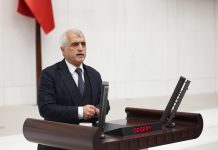
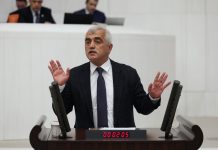
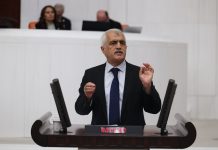
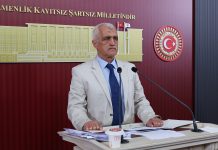
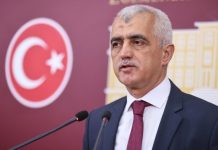
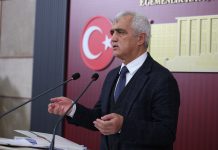
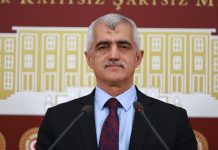
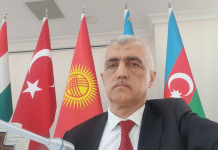
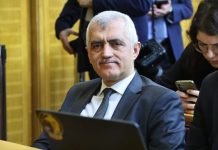
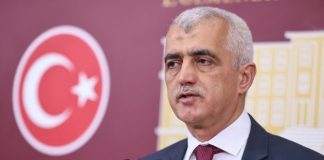
One exception I must note is DEM Party MP Ömer Faruk Gergerlioğlu. He has always been accessible and consistently spoken out about the injustice these young men have faced, both in parliament and in public. His support has meant a lot to us.
Is Alper receiving any support or solidarity from other countries?
We don’t receive any support or solidarity from other countries.
What do you hope for in the next nine years, for Alper and for Turkey?
What I hope for, more than anything, is for Alper to be free again, and as soon as possible. I want him to be able to live the life that was taken from him in his twenties, to rebuild his future.
For Turkey, I hope these next nine years bring true democracy, peace, and justice, not just in name, but in everyday reality. I want to live in a country where no onehas to fight for years just to prove their child’s innocence, and where no innocent person is forgotten in a prison cell.
Do you believe that Alper’s conviction can ever be overturned?
At this point, all legal avenues within Turkey have been exhausted, and we’ve now placed our hope in the European Court of Human Rights.
But I still believe that this injustice can be reversed if there is political will. After all, this is not only about my son. There are hundreds of young cadets and junior officers who were punished simply for following orders, without knowledge or intent. They were scapegoated in a moment of national trauma, and the state has a responsibility to acknowledge this injustice and rectify it.
I also see the ongoing peace process in Turkey as a meaningful opportunity. If the government is sincere about building a “terror-free” Turkey and achieving lasting societal reconciliation, it must include everyone. A general amnesty, for example, could bring an end to the suffering of my son and others like him — young men who have done nothing to deserve spending their lives in prison.
Justice should not take decades. Therefore, an amnesty would be a fast and definitive step toward correcting the ongoing inequality in receiving justice and toward genuine reconciliation.



Yorumlar